
Queer Ecology
Photo by Ben Tavener
Current Systems of Power
By recognizing how the environment and the queer community are harmed by dominant groups and oppressive systems, the protection and progress of both groups can continue.
-
Heteropatriarchy actively harms minority groups as well as the environment. Heteropatriarchy places everyone in a system to be racialized and gendered in comparison to white, cisgender men, and additionally forces people into Western ideals.
-
Heteropatriarchal thought is harmful to LGBTQ+ people because it forces heteronormative and cisgender expectations onto sexuality and gender. This does not allow for variation or a spectrum of gender and sexuality, and makes LGBTQ+ people out to be deviant and not normal.
-
Heteropatriarchy is also harmful to the environment because it pushes colonial ideals which hold the values of domination, excess, and power . These values are what continuously harm the environment and encourage extractive processes and habitat destruction.

Photo by Robert Couse-Baker
What is Queer Ecology
Oppression towards the queer community comes from current systems and expectations that place normative standards on LGBTQ+ people. Norms can be challenged through other systems of thought such as queer ecology.
-
Queer ecology is an interdisciplinary area of study that explores how the environment, and the queer experience are connected. Queer ecology comes from the belief that humans are capable of more than what people in power give them credit for.
-
Takes from both queer theory and ecofeminism
-
-
Queer ecology sheds light onto the biases and limitations that a heterosexual view has on nature. A heterosexual view on nature consists of looking at the environment in a two-dimensional way, that things just “are how they are.”
Queer ecology is also very interconnected with social issues, such as the struggles of people in poverty and those of non-white people.
Queer ecology can connect the struggles of nature with the struggles of marginalized people. The environment has also been exploited and marginalized, much like many groups of people. Queer ecology explains that the similarities in being oppressed by dominant groups is a way that queer people can engage with the environment and relate to the environmental movement more.
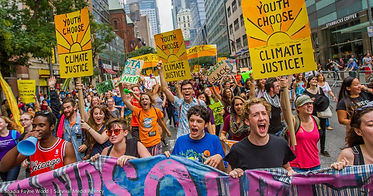
Photo by Peoples Climate
Examples of Queerness in Nature
-
There are hermaphroditism fish like the gag grouper and the California sheephead. These fish can change their sex between male and female. There is evidence that this special trait in fish can help them to recover depleted populations, including populations that have been decimated from overfishing
-
Female geese have been observed having long-term female partners
-
Red squirrels are known to be seasonally bisexual
-
Dolphins often pleasure themselves with other dolphins of the same sex.

Photo by Matt Elyash
References
-
Arvin, M., Tuck, E., & Morrill, A. (2013). Decolonizing Feminism: Challenging Connections between Settler Colonialism and Heteropatriarchy. Feminist Formations, 25(1), 8–34. http://www.jstor.org/stable/43860665
-
Dietz, K., Heuser, A., & Hülsmann, K. (2021). Gender, Nature, Body – Ecological Crises and Conflicts over Nature from Feminist Perspectives. Freie Universitat Berlin. http://dx.doi.org/10.17169/refubium-30511 Dodds, J. (2020, June 29). Pride Month, LGBTQ+ and the Environmental Movement. Retrieved October 07, 2020, from https://www.endangered.org/pride-month-lgbtq-and-the-environmental-movement/
-
Ecological Society of America. (2020, January 13). The advantage of changing sex in fish population recovery: Harvesting of male fish near Marine Protected Areas affects sex-changing 20 species differently from fixed-sex species. ScienceDaily. Retrieved March 8, 2022 from www.sciencedaily.com/releases/2020/01/200113175644.htm
-
Hoffner, E. (2011, March 29). How to queer ecology and the environmental movement. Grist. Retrieved October 07, 2020, from https://grist.org/article/2011-03-28-sex-geese-and-the-queering-of-ecology/
-
Johnson, A. (2011, March). How to queer ecology: One goose at a Time. Orion Magazine. 21 Retrieved December 4, 2021, from https://orionmagazine.org/article/how-to-queer-ecology-oncegoose-at-a-time/
-
Ourkiya, A. (2020, February 24). All you ever wanted to know about ecofeminism. RTÉ. Retrieved March 29, 2022, from https://www.rte.ie/brainstorm/2020/0219/1116323-ecofeminism/
-
Sandilands, C. (n.d.). Queer Ecology | Keywords. Keywords: NYU Press. Retrieved April 26, 2022, from https://keywords.nyupress.org/environmental-studies/essay/queer-ecology/
-
Toorn, J. van der, Pliskin, R., & Morgenroth, T. (2020). Not quite over the rainbow: The unrelenting and insidious nature of heteronormative ideology. Current Opinion in Behavioral Sciences, 34, 160–165. https://doi.org/10.1016/j.cobeha.2020.03.001