David Mizejewski
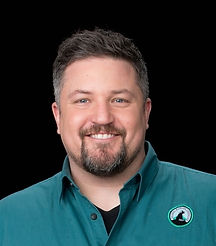
David Mizejewski (He/Him) is a naturalist with the National Wildlife Federation (NWF). He works in different forms of media including television, radio, and blogging where he engages with the general public. He works to educate and inspire people to get involved with the National Wildlife Federation. He also works in publishing literature from the NWF including Ranger Rick and Zoo Books.
Interview with David Mizejewski
Lizzy Russo: All right. So now that I figured everything out technology-wise, so to start can ask you what you do for work or kind of how you'd sum up what you do.
David Mizejewski: Sure. My name is David Mizejewski and I'm a naturalist with the National Wildlife Federation. The Wildlife Federation is one of the oldest and largest environmental conservation groups in the US. We do a whole bunch of different conservation work from fighting for good policy back in Washington, D.C., to boots on the ground projects. We do a lot of landscape level work. We also do a ton of work in the space of getting people connected to nature, including publishing Ranger Rick magazine and lots of kid oriented kinds of programs and opportunities. So we do a lot of really cool work. So my particular role is, I have a few different roles. So as a naturalist, which is really just somebody that has a knowledge of the natural world, but then actually is able to communicate about how to interpret the natural world in ways that just engage, you know, the average person people that maybe don't have science degrees or call themselves conservationists as they're part of their career. And you know, I do my work as a naturalist, largely in the media. Now, most naturalists are working at places like nature centers or zoos or national parks. And I do most of my naturalist work via television, the radio, with blogging, social media, etc. So I've hosted series on Animal Planet and on Nat Geo Wild. I do a lot of TV appearances everywhere from the Today Show, which I've been doing appearances on since 2009. I used to do the Martha Stewart show all the time. Conan O'Brien. I'm a regular on The Wendy Williams Show. I've even been on RuPaul's Drag Race. So it's kind of an awesome job to be able to go out into the world and get these bookings to go on these media outlets that reach millions and millions of people and just get to share what I call my nature geekery with everybody else out there. Hopefully in doing so and kind of showcasing wildlife and talking about issues that affect our shared environment that not I'm only not only am I educating, but also hopefully inspiring people to get involved with the National Wildlife Federation. I also do a lot of work behind the scenes, curating content and doing lots of review of content to ensure scientific accuracy before it goes out to the public. You know, things like making sure when we're talking about monarch butterflies that we're not showing pictures of viceroy butterflies, which are a co mimic, right? And just, you know, simple things like that that are easy to get confused by. And so I do a lot of that kind of work. I work on a lot of our partnerships and a lot of our programs as well.
Lizzy Russo: That is all super cool. I didn't know you're on Drag Race, that's really fun.
David Mizejewski: Yeah, but I was on season five. I was at season six, the season that Bianca Del Rio won.
Lizzy Russo: So season six. Yeah. And also I was a big ranger Rick kid. So that's really cool. I didn't know National Wildlife Federation did Ranger Rick?
David Mizejewski: Well, you know, that's why I always mention it, because a lot of people know Ranger Rick, but they don't always realize that this is something that the National Wildlife Federation publishes, in fact. Ranger Rick is, I think, going on maybe fifty five years that we've been publishing Ranger magazine in some way, shape or form. In fact, today we have three different Ranger Rick titles Ranger Rick the Classic, which is, I think it's like seven to 11 years old. But we have also got Ranger Rick Cub, which is three to, I'm sorry, ranger Rick Jr., which is three to seven. And then Ranger, a cub which is like basically like toddlers to two years. It’s for kids that you know, can't even read yet, but that want to look at pictures and parents are reading it and that kind of thing. And we also have several other titles under the Ranger Rick Brand that are part of the Zoo Books line. I don't know if you ever saw zoo books, but that's book publishing profile as well, too.
Lizzy Russo: Those magazines are definitely a big reason why I’m in environmental science now.
David Mizejewski: Me too. I grew up reading both of those, and in fact, I actually had my entire zoo books original run from the 80s that I just keep with me as inspiration. Every now and then, I crack them open because they were actually incredible in terms of just being like little mini visual encyclopedias for wildlife facts and, you know, based on actual good information and good science.
Lizzy Russo: Yeah, it's really cool. Um, so my first question is, how did you get involved in conservation?
David Mizejewski: Well, you know, I am one of those people that has always been drawn to animals and to nature ever since I was a little kid. Like I said, I'm a lifelong nature geek. I was one of those kids that was lucky enough to get to run around in the woods and climb trees and catch frogs. And, you know, bring home all sorts of critters to my bedroom always was covered in mud and poison ivy until I learned how to identify it. So I feel like for me, there's for sure, you know, just sort of that innate draw that I think most people have and some of us maybe have a little bit more strongly than others. And you know, and I was very lucky, even though neither of my parents are really sort of very outdoorsy. In fact, they were both sort of city kids, they really encouraged my sisters and me to just play outside. You know, we grew up in suburban New Jersey, so just, you know, typical suburbia neighborhoods surrounded by woods and fields and streams and wetlands. We weren't too far from the ocean. And so just I spent a lot of time outdoors, just kind of learning through self-exploration, which incidentally, is one of the most important ways that kids can experience nature that we know, there's actually a whole body of research looking at that the power of unscheduled playtime in nature, and I kind of think of myself as a walking example of that. And anyway, yeah, I always was really just kind of into wildlife, into nature, and I was a junior naturalist at the local nature center and things like that. And, you know, grew up and went to Emory University and decided to pair my political science degree with a co-major in human and natural ecology, essentially environmental studies with a 360 degree look at all things to do with sort of environmental issues on this planet. And so I took some science courses, but I also took courses like the history of the conservation movement in the U.S. and religion and ecology and environmental communications and things like that. And one really key thing that happened to me was when I was a senior in high school, which is nineteen ninety three, a book came out called Noah's Garden, restoring the ecology of our own backyards. And I thought, wow, that's kind of interesting, interesting title. I think I remember reading our review of it, and I was like, ‘how do you help wildlife where you live’ well it's all about what you plant? And I was like, OK, that's really interesting to me. So I ended up picking that book up and I read it, and it was like one of those just sort of moments. And in hindsight, you know, I realized that it was kind of life-changing because for me, it really connected my love of animals and my wish to protect wildlife and restore their habitat and things like that, to plants, which is something that I was interested in. But, you know, I think most people have more of an affinity for animals than plan. And so it really was that light bulb moment, because what the book is about, it really kind of breaks down the ecological relationships between plants and animals and in this particular book, it was all about the power that we all have to help out wildlife by restoring some of their habitat right on our own piece of the Earth, which is our own yards, gardens, whatever space we have. And the whole idea behind it was planting native plant species that are going to be the caterpillar’s host plants for all of the butterflies and moths and be the plants that are producing the berries right at the exact time that birds are migrating. And be, the, you know, the plants that supply all the critical elements of habitat and have for, you know, tens or hundreds of thousands of years that are part of the ecology of the wildlife. So in other words, you really can't have good, healthy wildlife populations if you don't also have that healthy native plant populations. And so my poor parents, I made them rip out their entire landscaping and I talked all about native plants of the Northeast and so on and so forth. So fast forward a few years I graduated from Emory, moved to Washington, D.C. I thought, who wouldn't want to hire me? I went to a great school. I have a good GPA. I have three internships under my belt and no one wanted to hire me. Sall dose of reality about the job market. Not to scare you, but you know, it's competitive, right? And so it was a good learning experience for me not being hired right out of the gates because it made me kind of force me to do some other things that again, in hindsight, were really critical for my career development. So I worked at a small zoo in Virginia and got some experience handling wildlife ambassadors, doing education programs. I worked at a nature center just outside of D.C. for three years on the weekends, and I ended up at my very first kind of office job working for another conservation group that was focused on an urban forestry and replanting trees in our cities and whatnot. And I kind of rose from the administrative assistant to running one of the programs over the course of those three years. One of the benefits of working for a small organization is that there's a lot of room for growth there. And ultimately, after getting all of that experience and spending three years, basically working seven days a week and paying my dues, if you will, I ended up getting hired at the National Wildlife Federation to run their national, what we called back then, the Backyard Wildlife Habitat Program. Today, we call the program the Garden for Wildlife Program. And I started it at National Wildlife Federation when I was twenty four, so I'm going what will be my twenty second anniversary working at National Wildlife Federation. So that's kind of how I got, you know, sort of my innate interest that transformed into a career. And, you know, if you want, I can go into how I went from getting hired to run that program to RuPaul's Drag Race. But that's how I got here.
Lizzy Russo: That's really cool. That sounds encouraging. That's kind of similar to what I'm doing at Allegheny College. I'm a major environmental science, but a minor women's gender, sexuality studies. So I get a full range of kind of learning how to communicate with people while also doing bio and chemistry and GIS and all different stuff. So that's really cool. I've learned it's so important to learn how to communicate about the environment. So that's so encouraging to hear. So what has your journey to success been like as an LGBTQ person?
David Mizejewski: Oh, well, there's a lot to unpack there. You know, when I first started in my career, I wasn't really out. I was a little bit of a late bloomer. I didn't really fully come out to like the world until, I don't know, like my mid-twenties. And you know, that combination of things, I mean, even just between my age and your age, the cultural aspects are just very different. There weren't people when I was growing up who were coming out in high school or really, frankly, college. You know, I didn't come out until right after college and so few years after college. And so in terms of sort of my career and the intersection with my identity in the beginning, it was kind of scary, you know, like I was in the space and I was so excited about it. But you know, you when you're in the closet, you always have a fear of exposure. You know, someone's going to know, someone's going to find out. And again, probably more unpacking than we have time to do here. But I for sure had some difficult scenarios when I was in my first few years before I really started coming out to coworkers. You know, just, there's a lot of sexual innuendo and probably hitting on happening with some of my straight female colleagues. And, you know, I just sort of had to roll with the flow of that with like just the awkward situation to begin with, and that's happening. Our coworkers, but also the fear of them, like, how do you respond to that when you're not out? It was just the normal for me at the time, so I didn't really think too much about it. But in more recent times, just sharing with some of my colleagues at the National Wildlife Federation and about some of those early experiences, I realized it was actually pretty traumatic for me. And so, you know, eventually I did start, you know, kind of come out in my external life. And that was great and I didn't really experience, you know, too many barriers. You know, my parents had the typical conservative Catholic family, you know, kind of crap about it. It didn't help that my older sister was gay as well. And so two out of three of us came out gay. So but everything's cool now. And so it's very relevant that the question is very relevant because, you know, I started at NWF in the year 2000 doing the Garden for Wildlife thing. In 2004, I had this really great opportunity to write a how to book on how to create one of these wildlife friendly gardens based on kind of a guide that the National Wildlife Federation had and that I wrote for the program that we kind of self-published and a book publisher was like, we could sell this on the shelf. So I did that. The book came out in 2004, and a few months later, the TV network Animal Planet reached out to me because they had created a like a TV series concept, a treatment based on the book, which I was asked to review. And it was perfect and brilliant. And literally the next thing I know they like, pushed me in front of the TV camera and I was suddenly a TV host. So I co-hosted forty seven episodes of that series. It was called Backyard Habitat, that we shot over the course of 2005-2006. So when that happened, suddenly I was like in the public eye and I was in the media and I was representing in a much bigger way, you know, one of the biggest conservation groups in the US. And that started catching people's attention. I was featured in the twenty 2005 Out Magazine out 100 list. I'm not sure if you're familiar with that, but actually at the end of every year, they put together a list of, I forget how they phrase it now, but you know, some of the most interesting and influential LGBTQ plus people. So it was like, holy cow, this is like, what's happening? You know, like all worldwide. I, of course, was so honored and thrilled, but I also had all that fear and anxiety about what's going to happen back at my job. You know, like, is this going to be a problem like, you know, and so I can remember. Actually, I want to take one step back. I can remember when I started doing backyard habitat again, not sort of living fully out, so not that I was like hiding it, but I was not really talking about who I was and the fact that I had a boyfriend and all of that and I can remember fairly early on shooting it. One of my colleagues, I think it was the publicist on that show. We just kind of had a conversation, and I remember her basically kind of very delicately, I made a comment and about being gay, and she kind of was like, Well, are you gay? And I was like, yeah, of course. And oh God, because no one knew and there was all this, yeah, people were talking, wondering and all of that just stuff that it shouldn't have to be. And so anyway, I can remember at that point in time realizing that because of this opportunity that I had a choice to make. I could, because again, even back then, that recent there was the fear of, oh, you cannot you can't let people know that you can't be a TV host. If you're if you're gay and you're out like that, that's career suicide. you know, that kind of whole thing was still a thing. And so I just remember thinking to myself that, I'm not going back in the closet. I don't care about TV or career or whatever like, screw that, I'm not doing it, so I'm going to be me and whatever happens from here is going to happen. And of course, that was like the best decision that I ever could have made. And so I just decided I'm not going to be beating around the bush. I'm just going to talk openly about who I am. And then the out magazine thing happened. And so then I was like, Oh my God, this is amazing. So I remember sharing it with a group of people internally, like especially our communications team and just saying like, this is a really great honor and I'm really flattered to be part of this group. You know, it's everybody. I can't remember everybody who was on the list that year, but you know, it was Ryan Murphy and Nate Berkus, and, you know, people like Ellen DeGeneres and Oprah and RuPaul are like the kinds of people that are on this list. And so I was kind of like, oh my God, this is like amazing. And when I shared it internally with the National Wildlife Federation at the time, it was crickets. There was zero response. And so that, of course, that was crushing. Now fast forward from then to today, night and day. I mean, night and day. The organization has majorly evolved, and some of that is just, I think, sort of the normal background cultural evolution that we've had in the US. But a lot of it is thoughtful and deliberate effort on the part of leadership. And that in and of itself, I think, is also due to, you know, just sort of getting the natural change over of leadership, and, you know, younger people coming in. Our presidents, Collin O'Mara is a millennial. You know, he's actually younger than me and has really done a tremendous job at making kind of equity and diversity so much more of a priority for us as an organization and is deliberate about talking about it. Everything that's happened in the last couple of years with sort of the racial reckoning in this country, you know, we've had, you know, like everyone, you have to make a decision like, are we going to deal with this now or are we just going to continue to kind of sweep it under the carpet or stick our heads in the sand or whatever phrase you want to use? And Colin, with a lot of both pushing but also support of all the various diverse communities that are part of the National Wildlife Federation family, you know, we've really been able to make some significant strides in transforming and acknowledging just things like the very racist, and you can throw in homophobic history of the conservation movement and the fact that that these elements still exist in pockets in in really strong ways throughout the wildlife community and the conservation community today, I mean, we've made that decision like we're going to do the work. We're going to have the conversations. We're going to make the systemic structural changes within the organization to support that kind of equity across all different kinds of people so that, you know, disrupting power structures, and you know, a lot of this has to do with race, but it also has to do with religion and your sexual or gender identity. You know, these are all factors and all that. So it's right now I feel pretty empowered, even though there's still so much work to do. And we're definitely not there yet. There's still challenges that I and other colleagues face every single day with those power structures with just sort of inherent discriminatory culture. You know, whether that's white supremacy culture or heteronormative culture or whatever, we're doing the work and that's the important thing. And some of the things that we've been able to do and overcome just in the last year are feel pretty good.
Lizzy Russo: That's all really great to hear, that's so encouraging. I'm very glad to hear that your organization's been able to do that. And that's encouraging for my future as well to hear that there's organizations making strides.
David Mizejewski: Yeah, absolutely. If you go to the National Wildlife Federation website, we actually have a sort of an equity statement and strategic plan that you could read through. And it will give a lot more context to everything that we're talking about, but really ultimately our position, you know what, a step back, another step back, there is when you do that as a conservation organization, you get a lot of pushback, saying well just stay in your lane, focus on wildlife conservation. But here's the thing, we are never going to be able to accomplish our mission and our wildlife conservation goals unless we engage everybody. Right. Because everybody has an opportunity to get involved. All of us are having impacts on wildlife. If you just want to look at it from pure strict, you know, like demographics, if we're not engaging, diverse communities in 50 years, there isn't going to be a conservation movement, right? Like if we care about wildlife, we have to acknowledge that the country today is going to look different. Well, just as it looks different than it did 50 years ago and 50 years from now, it's going to look different. So it's part of the mission of the National Wildlife Federation to engage all voices and in particular marginalized voices, and not just those of communities that are growing and demographic power, everyone. You know, and again, this is part of acknowledging that there’s a lot of the racism that has been inherent in any conservation and outdoors movement and how a lot of it was based, founded by people who were horribly racist and and a lot of our seemingly sacred institutions, our national parks and things like that have been horribly exclusionary. You know, again, a lot of this is focused on race, but you know, I to this day wouldn't feel comfortable holding my husband husband's hand hiking in a national park. You know, that could be a threat to my safety. Right? And so that's why it's important for a wildlife conservation group to be involved in the equity space because again, that's what it boils down to. We're not going to save wildlife unless we engage everyone.
Lizzy Russo: Yeah, totally. Those are really good points. And one of the big reasons why I am doing this senior thesis is to show that so many different people need to be engaged. So my next question is, do you think it's it's important for more LGBTQ people to be involved in wildlife conservation?
David Mizejewski: Well, yeah, I think it's important for everyone to be more involved in wildlife conservation. You know, I'm sure there have been books written about this, but I feel like those of us, you know, sort of in the in the rainbow umbrella of identities. In my personal experience. I feel like we have a special affinity for animals and plants and just the natural world, I don't know why that is. You know, maybe it's our wounded souls, you know, in some way we all go through trauma. If you if you have one of our identities, right, and animals are healing and animals always are present, I think a lot of times just sort of like, a pure innocence that our wounded souls are drawn to. I mean, for, you know, a lot of gay people, we choose not to go the route of adopting children or having children, right? And so our pets oftentimes are our, you know, our children, we spoil them rotten and everything. So I don't know. I just feel like there's something special about our suite of identities when it comes to having an affinity for nature. And I, for one, would love to see the conservation movement step up and do a little bit more outreach talking directly to us and tapping into that power that we have. We’re also, I think on average are far more activist oriented than the average American, and that's a power, you know, we have a voice. There's a lot of us. I mean, we're always going to be a minority, you know, in our sexual and gender identities, right? But that doesn't mean that there's not a lot of us and that if rallied and if that affinity is tapped into in the right way that we couldn't be a significant force within the conservation movement. So. Yes, we should be involving everybody, but in particular, I think a lot more effort really should be going into specifically talking to specific communities and in particular the LGBTQ+ community.
Lizzy Russo: Yeah, I have found that a bunch in my research that for some reason LGBTQ people just have, like you said, an affinity for the outdoors and some kind of connection to it. And it's so interesting to learn about.
David Mizejewski: Yeah, I would like to learn more about it. So if you have any like resources or things, articles or, you know, books or interviews or whatever could link them to me in an email because I would like to learn a little bit more about it.
Lizzy Russo: Yeah, I read one book specifically for this project, I don't know if you've heard of it, Bad Environmentalism. I can send you the information about in it. But there's one chapter specifically about queering environmentalism, and there's chapters about all different kinds of minority groups and environmentalism. But that one chapter specifically really drove my research and kind of opened my eyes to what queer environmentalism could be.
David Mizejewski: Well, I just found it, Bad Environmentalism Irony and a Irreverence in the Ecological Age. Is that it? Yeah. OK. I will seek that out.
Lizzy Russo: Yeah, it was a pretty good read, especially the one chapter on queer environmentalism. So this may be a little bit repetitive, but why do you think LGBTQ people have a connection to the environment and what specific ways do you think LGBTQ people can contribute to conservation?
David Mizejewski: Yeah, I mean, you know, that's what we've been talking about with the last question, too. So, you know, and to answer the second part of the question like, how can we be involved? I mean, there are so many ways to be involved, and it's really not different from group to group, right? I mean, there's a whole kind of spectrum of ways that people can be involved in the effort to save species, to protect our air and water, to preserve habitat and the landscape. So those range from sort of passive ways, like just financially supporting the work. Most of this work is being done by not for profit organizations. And I can tell you, our budgets are a small fraction of what, say, a for profit company is that might be responsible for doing a lot of environmental destruction. So it's definitely a David and Goliath kind of scenario where, you know, we can't take out TV ads the same way that companies who are trying to sell us things that are. So how do you battle that? It takes every penny. And the more that that people financially support these not for profit groups, you know, become a member, make a donation. There are a lot of people who leave a portion of their savings in their will. And believe it or not, that's a significant way that a lot of groups bring in the funds that we need as people leaving these, these requests, you know, for folks that are even more financially able, you know, larger donors can make a huge difference by making significant contributions. So there's that. There's also getting actually involved in a very tangible way by engaging with programs. Now there's a lot of programs that we have at the National Wildlife Federation and, you know, lots of other organizations, too, that you can get involved with, like going places like doing something, cleaning something, saving something, planting something and being part of that structured program that is doing this work that needs physical contributions from people. You know, your time, your thoughts. You know, sometimes your manual labor doing this kind of stuff, removing invasive plants is another great one. And so that's another way that people can get involved. Another fairly passive way is just using your voice. So that could be signal boosting an effort or a program by sharing it on your social media, that counts. I know people give a lot of grief to kind of armchair activists and social media activists and that kind of thing and say that it's, you know, it's meaningless. It's not meaningless. You know, is it as meaningful as writing a check or actually, you know, writing your, you know, your senator or whatever? Or, you know, I don't know, maybe not, but I'm certainly not going to get down on people who are making some kind of effort. I'm going to encourage you to do more. But I don't think we should, you know, again, sort of pooh pooh people that just share stuff on social media because that's an important communication vehicle that quite frankly, reaches a lot of people. So if we're going to be serious about reaching people and engaging them, you can't sit in your ivory tower and look down your nose at TikTock, you know, or Twitter or Facebook or whatever. Right? Like, let's be part of the conversation. Let's utilize the tools that we have at hand because you know what, the people that are trashing our environment and driving our species to extinction, you know, you better bet they're taking advantage of it. Right. So we should, too. So, yeah, so financially supporting conservation, getting involved in a physical way in programs and whatever, using your voice signal, boosting messages on social media, sharing with your family, you know at the dinner table is a really powerful way. And then there's the more kind of traditional activists opportunities. And, you know, quite honestly, the most power that we have is is focusing on policy and legislation. Now, personal actions are not going to save us. They can be a really important piece of the puzzle. And there are really fantastic way of actually getting people engaged and committed, but you know, the onus should not be on us to change our light bulbs to stop climate change. Right. We need to make reform to the fossil fuel industry, right? So and for that, we do we need people's voices and we need people's dollars. But specifically, we need them to be letting your elected officials know that you support the passage of certain legislation, the protection of existing legislation that shouldn't be weakened or eroded. You know, political parties matter in this country. So will you vote for this bill? It's really probably the most powerful thing that any of us could do. And, you know, ask the question, does this candidate support wildlife conservation? Do they support clean air and clean water? Do they have a record of it? Does their party have a record of it and be brutal? You know, and there's no perfect politician. There's no perfect political party, but they're not the same. I'll just put it that way.
Lizzy Russo: So my last question for you then is do you have any suggestions for young LGBTQ people who are interested in pursuing conservation or environmental science?
David Mizejewski: Well, I have some general info or advice that I always say, and that is the usual just be engaged, be passionate, work hard and do the work. And if that means doing well in school or if it means getting out on your own free time, immersing yourself in nature and learning from doing, it doesn't matter. You know, you can't just sit around and expect the knowledge to come to you or the opportunities to come to you. So, you know, just dedicate yourself and do that work to learn and absorb and be passionate. And that's the kind of very broad statement that really could apply to any career, right? But the other thing that I always remind people is that you don't have to be a scientist, you know, you don't have to have a biology degree or something like that in order to be a conservationist. My colleagues at the National Wildlife Federation are attorneys and copywriters and marketers and web developers and communication specialists and fundraisers. You know, none of them have a science or nature background. Whatever your interest is, whatever your natural talents are, there's always a way to make those work. For conservation artists, social media experts, you know, I mean, the list goes on and on, attorneys. I might've have mentioned that already. So don't limit yourself, you know, do what fills your heart with passion that you know, is going to be a fulfilling career for you to get that degree in marketing. But if you really care about wildlife and animals and conservation and all of that good stuff, there are tons of opportunities within the conservation world. Whether it's working for a not for profit organization like I do or a consulting firm or working at an agency, a government agency. There's a lot of ways that that you can get involved and, you know, speaking specifically to our community. I would just say, you know, my advice is to if you care about any of this stuff, to do it and be you. Because we need your voice. You know, we need to see people like us out there. And I know that it's not safe for everybody to do that. But if you can, you know, we're here to support you. And we're here to elevate you. And we're here to protect you. And we're here to say like, this is who we are and knowing that there's a world within wildlife in it is important and we're going to use our unique talent and and perspective. And what's the RuPaul's Drag Race saying? Charisma, talent and what's it? What's the what are missing?
Lizzy Russo: Charisma, uniqueness, nerve, and talent.
David Mizejewski: Yes. Yeah, we need that in conservation, specifically the kind that only we can bring as LGBTQ+ people. And so, think about the kids coming behind us, too, is we all if we can have that opportunity to pave the way for somebody who's still struggling, who doesn't have a supportive family, who does live in fear because of who they are. And so for me, I do it for the kids, if you will. But honestly,also for people older than me who you know who even 10 years older than me, had yet again a very different experience with coming out and those kinds of things. And so I think it just it's important for us to be a part of the story and to be doing it visibly as much as we can.
Lizzy Russo: Yeah, that's awesome, that is so great to hear. So that is that's all the questions that I have for you. Do you have any last things to mention about any anything that we talked about?
David Mizejewski: I don't think so. You know, I think we covered my thoughts at least, and I don't think there's anything about my own personal experience that. Oh, well, I will add one thing when I was talking about kind of the National Wildlife Federation journey, our equity journey, if you will, one of the things that we have started probably almost two years ago is employee resource groups. I am not sure if you're familiar with the concept, but essentially the ideas is kind of empowering employees to form affinity support, networking kind of groups based on kind of unique identities, and it's a thing where a lot of companies have and this its kind of our first foray into them at the National Wildlife Federation, and we're still kind of figuring it out. But I stepped up and helped found our LGBTQ plus here at the National Wildlife Federation. And it's been it's been a great experience just getting to talk to my colleagues, many of whom I don't I don't engage with on a day to day basis because our work doesn't intersect. But being able to just see each other and to know that there is this community of people that kind of are like me or in this, this again, this spectrum of identities that that shares a kinship, if you will. And you know, we've been able to do some interesting things, you know, just internal education.
Lizzy Russo: Yeah, I went through all my questions. So if you don't have anything else, I'm all set. Thank you so much for talking. Today was great.
David Mizejewski: You're welcome. Have a good evening.
Lizzy Russo: Thanks, you too.